Stumped vs run out: what changes on a wide, a no-ball or an attempted run?
WicketPulse · Published
Updated
A wicketkeeper breaking the stumps does not automatically mean a stumping. The delivery call, whether the striker attempted a run, and who intervened all matter. Read those details before interpreting the dismissal abbreviation on a scorecard.
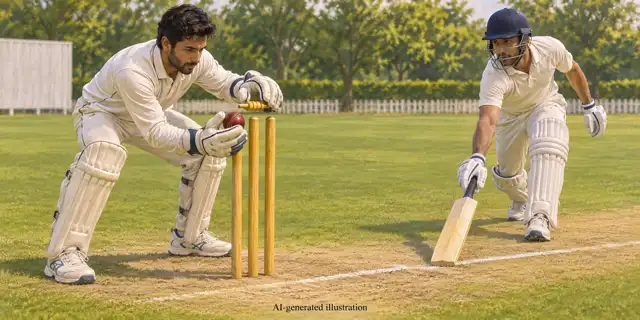
Start with the striker and the keeper
For stumped, the striker must be out of their ground, not attempting a run, on a delivery not called no-ball, with the keeper fairly breaking the wicket without another fielder’s intervention. Injury-avoidance provisions also apply. A run-out can involve either batter and is not limited to attempted runs.
For an ordinary grounding check, look for bat or body grounded behind the popping crease. The separate protection after grounding while running or diving prevents a later bounce from automatically reversing that safe arrival. A still image can miss that sequence.
Compare three fictional keeper-only cases
These cases assume a live match, a lawful keeper position, a fairly broken wicket and no free hit. Under these T20I conditions, free-hit dismissal restrictions also prevent a stumping, even if that delivery is wide.
The third row is a precise exception, not general immunity on a no-ball. If a run is attempted, or another fielder intervenes, assess run-out under its own conditions. On a wide that already supplies the winning run, the match has ended and a subsequent stumping is not possible.
Each row deliberately fixes the surrounding facts. This makes the table useful for comparison without suggesting that every brief clip fits one of its cases. In particular, a camera crop may hide a fielder’s touch or the start of an attempted run.
| Assumed facts | Outcome under these conditions |
|---|---|
| Normal delivery; striker misses, stays out, no attempted run | Stumped if other requirements hold |
| Wide; same facts; match still in progress | Stumped; wide penalty remains |
| No-ball; same facts; no other fielder intervenes | Neither stumped nor run out in this specific case |
The keeper’s name does not settle the label
Read the dismissal type first, then the named fielders. A keeper may complete a run-out after a throw, or break the wicket in a stumping situation. The person performing the last action is only part of the evidence.
When keeping your own notes, use separate fields for the delivery call, attempted run, intervening fielder, grounding sequence and official decision. That record is more informative than writing “keeper took the bails off”. It also tells you which detail is missing when two accounts appear to disagree.
Check the innings and the final record
A short live commentary line may arrive before the full batting card is corrected. Compare the same batter, innings and delivery, and retain the original source if you are documenting a discrepancy. The final official classification is the reference for a completed-match report.
Our cases use the cited October 2026 ICC T20I conditions and MCC’s 2026 law framework. They are teaching situations, not claims about a real umpire’s decision. Other competition-specific procedures should be checked in the relevant conditions rather than inferred from a different match.