LBW explained: pitching outside leg and impact outside off are different tests
WicketPulse · Published
Updated
“Outside the line” can describe two different moments: where the ball lands and where it first hits the batter. Mixing them up makes an LBW replay hard to read. This guide separates the questions and uses fictional cases instead of judging a disputed real dismissal.
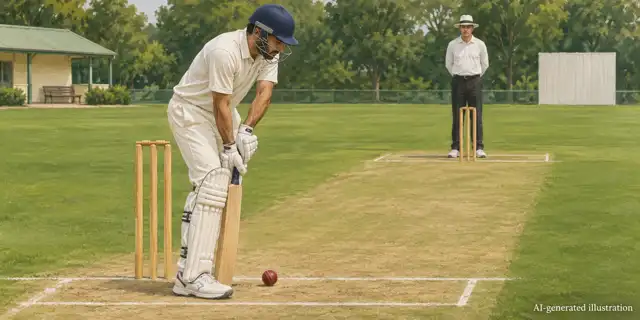
Keep five checks in order
ICC’s October 2026 Test conditions require a delivery that is not a no-ball; an eligible landing point, if it lands; body contact without prior bat contact; eligible impact; and a path that would have hit the wicket. All must hold. LBW does not require contact with a leg.
A useful viewing note has five boxes, not one verdict. Fill each box with what is known and leave missing evidence blank. A replay showing only the pad and stumps cannot, by itself, establish everything that happened before contact.
Landing and impact are different locations
The outside-off impact exception concerns whether a genuine attempt was made to play with the bat. Offering no shot does not remove the bar on a ball landing outside leg. A full toss has no landing point before interception, so do not invent one.
Read the table as a filter, not as four automatic match decisions. “Can qualify” means one obstacle is absent; it does not assert that the ball missed the bat, was legal, or would have hit the stumps. Keep those remaining boxes visible.
| Fictional case | LBW consequence |
|---|---|
| Lands outside leg, then hits in line | Not out LBW |
| Lands outside off, hits in line | Can qualify; check the other conditions |
| Hits outside off while a genuine shot is attempted | Not out LBW |
| Hits outside off with no genuine shot attempted | Can qualify; check the other conditions |
Work a case without skipping a step
Imagine a right-handed batter facing a ball that lands outside off, misses the bat, hits the pad in line and is judged to be going on to hit the wicket. With no no-ball, those stated facts meet the five checks. Now change only the landing point to outside leg: that version fails the landing test.
Changing one detail at a time is a useful way to learn the difference. If an explanation changes the landing point, impact and projected path together, it becomes difficult to identify which detail caused the result. Our invented pair isolates one variable; it is not an attempt to simulate ball-tracking technology.
Do not turn a camera angle into a measurement
A commentator’s description, a television angle and the official decision are different evidence. Record the announced decision separately from your own impression. Without a reliable view of an edge or the relevant location, write “not established from this clip” rather than filling the gap with certainty.
The law-level eligibility test is also separate from the review procedure used in a particular competition. This article does not set DRS margins or decide an umpire’s-call question. For a real review, consult that event’s current protocol and the official outcome.