Draw vs tie in Test cricket: why runs still needed do not mean defeat
WicketPulse · Published
Updated
A Test team can finish short of its target and still draw. A live score showing runs needed describes the chase; it does not by itself decide the result. The difference is whether the innings and match have officially ended, and how the teams' aggregate scores compare.
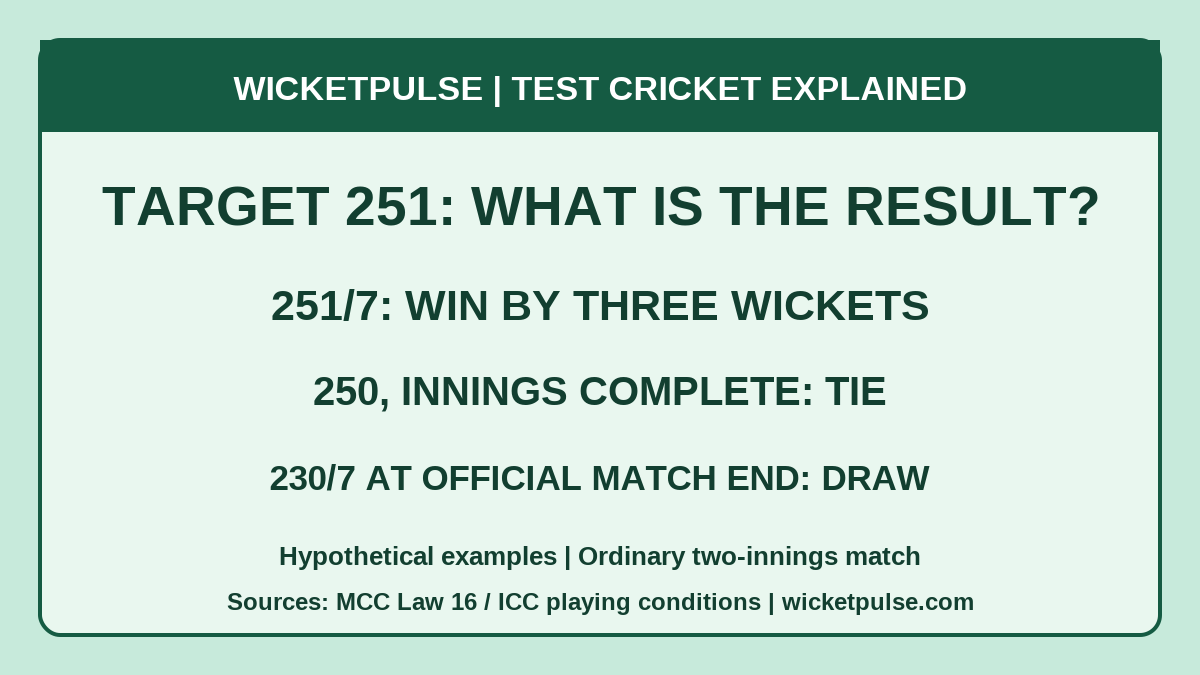
Three outcomes from a target of 251
These are invented examples for an ordinary two-innings match, without a penalty-run or awarded-result complication. If the chasing side reaches 251/7, it wins with three wickets remaining. If its final innings ends at 250 with the aggregate scores equal, the match is tied. If play officially ends at 230/7 with the innings unfinished, the result can be a draw rather than a 20-run defeat.
The target includes the run needed to move ahead. Reaching 250 in this example levels the aggregate scores; it does not win the match. Equal scores alone also do not establish a tie while an innings remains unfinished. MCC Law 16 distinguishes these results using completed innings and totals.
Why the final day is different from an ODI chase
Test cricket has a scheduled playing period rather than an ODI-style allocation for each chase. ICC World Test Championship playing conditions describe how the match concludes, including the last-hour requirements and agreed close of play. Readers should use the official final status rather than declaring a result when a displayed countdown reaches zero.
Lunch is an interval within a day's play. Stumps normally marks the day's close. Neither label, without an official final result, means the whole Test has ended. A fifth-day match can still be live while a side pursues runs or tries to keep its innings intact.
Read the status before the equation
Check the match date and innings, then its status, target, score and wickets remaining. Treat a dated checkpoint as a record of that moment. When the official centre confirms a result, read the margin from that final report rather than calculating a defeat from an unfinished chase.